A new collaboration puts material identity and traceability at the centre of efforts to turn premium cotton waste into new fibers and yarns.
Recover and SUPIMA announced a global partnership on November 19, 2026, to develop recycled fiber and yarn solutions from SUPIMA cotton waste. The agreement connects a specialist in cotton recycling with the organisation representing American-grown Pima cotton. For international textile manufacturers and buyers, it raises a practical question: how can recycled content enter premium collections while retaining a clearly documented material identity?
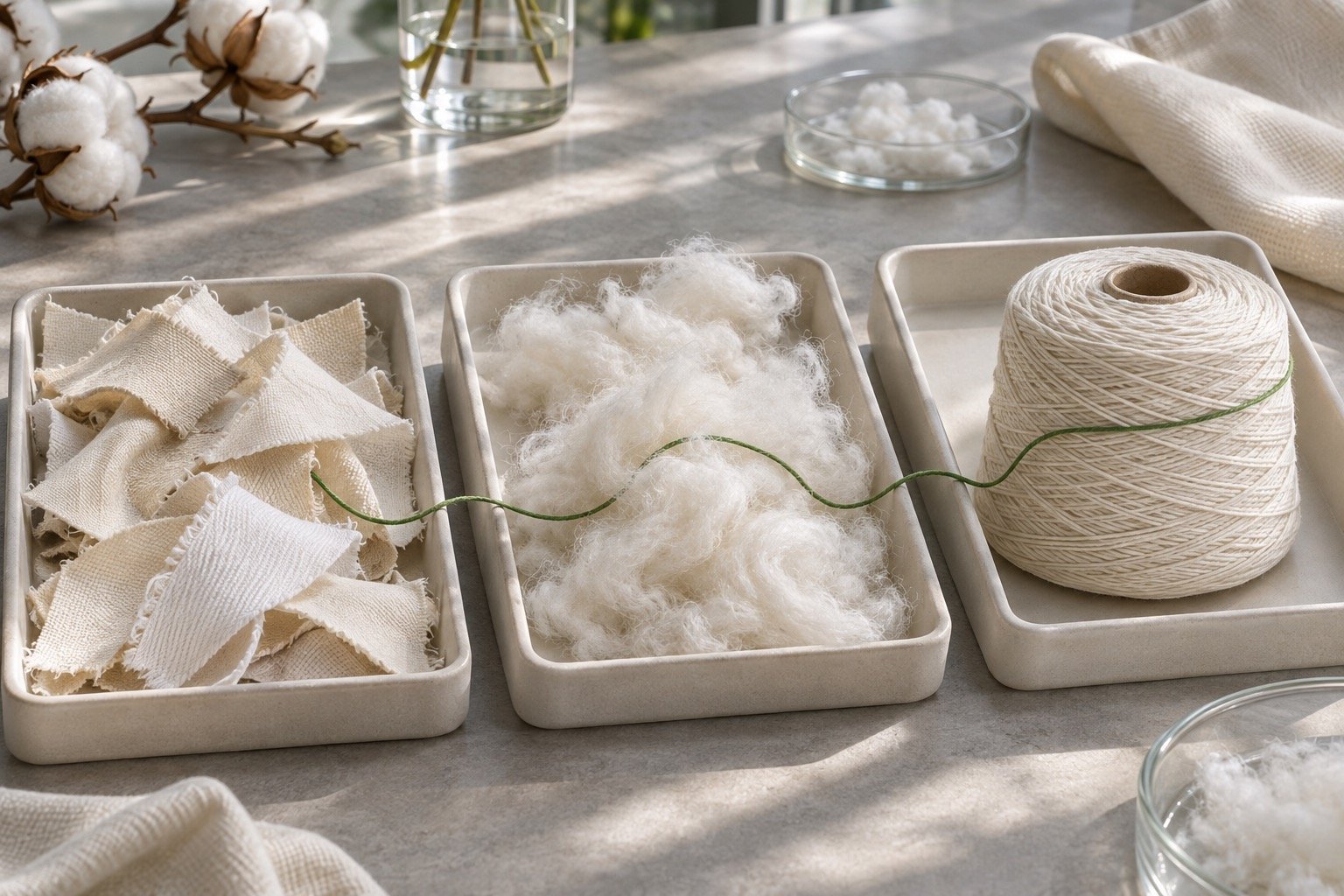
From production waste to new materials
According to Recover’s official announcement, the collaboration will give SUPIMA cotton product waste a second use in textiles and explore applications across premium yarns and garments. SUPIMA brings its international network of more than 1,000 licensees, while Recover contributes recycling capabilities and supply-chain traceability.
The partners say both virgin and recycled cotton in the offering will originate from American-grown SUPIMA cotton. Digital tracking through TextileGenesis is part of the approach. The announcement also describes origin verification through Oritain in comments from SUPIMA’s brand-development team. Knitting Trade Journal’s November 19 report corroborates the partnership’s focus on traceable recycled fibers and yarns for premium garments.
What a premium recycled offering needs to demonstrate
Our assessment is that this initiative is significant because it brings recycling into a discussion usually centred on fiber quality and provenance. A recognisable cotton identity can help structure sourcing conversations, but buyers still need evidence about the performance of the resulting yarn or fabric.
For a mill considering trials, useful questions include the recycled share in each proposed blend, the available yarn constructions and the consistency of successive deliveries. Fabric development teams should establish their own requirements for strength, appearance, handle and durability, then assess representative samples against those requirements. A partnership announcement is a starting point for that work rather than a substitute for qualification.
Traceability deserves equally specific scrutiny. A buyer should understand which material movements are recorded, what documentation accompanies a transaction and how an origin claim relates to the finished product. Digital records and material testing can address different questions; procurement teams should ask suppliers to explain the scope of each.
Implications for international sourcing
The announcement does not provide a rollout timetable, annual production volumes or a complete specification catalogue. Those details will matter when manufacturers move from development discussions to purchase commitments. Buyers should therefore confirm actual availability, minimum quantities and the conditions governing use of the SUPIMA name before planning a collection around the new materials.
For the wider textile industry, the collaboration offers a useful model to watch: connect an identifiable waste stream with recycling expertise, then make the material’s journey visible to downstream customers. Its commercial value will depend on turning that model into repeatable, documented products.
At INTERTEX MILANO, such developments provide a concrete basis for conversations between fiber suppliers, spinners, fabric manufacturers and brands. The relevant question is how material innovation can meet a defined product brief with credible evidence and dependable supply.